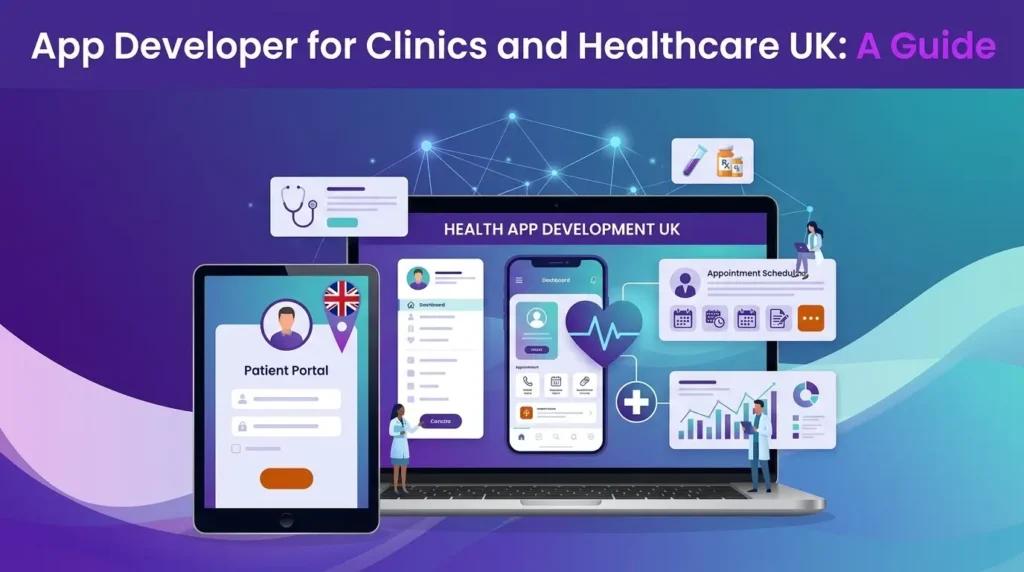
A private physiotherapy clinic in Reading called their old developer eleven times over three weeks trying to get a simple change made swapping the cancellation window from 24 hours to 48. Eleven calls. No response. Meanwhile their booking app was still sending confirmation emails with the wrong clinic address, because whoever built it had copied a template and never actually checked the details with anyone who worked there.
That’s not a rare story in UK healthcare. Clinics, dental practices, physio studios, private GPs most of them got their app or patient portal built by whoever was cheapest or fastest at the time, without anyone asking the obvious question: does this developer actually understand healthcare, or did they just build a food delivery app last month and slap a stethoscope icon on it?
If you’re a clinic owner or practice manager in the UK looking into building or fixing a patient-facing app, this is the honest version of that conversation including the parts about data compliance that most sales calls skip straight past because they’re inconvenient to talk about.
Why Choosing the Right App Developer for Clinics and Healthcare in the UK Actually Matters
Healthcare apps aren’t like restaurant booking apps or gym membership apps, even though on the surface they look similar calendars, forms, notifications. The difference is what’s underneath: patient data, and in the UK that comes with legal weight most general app developers have never actually had to think about.
If your app stores patient names, appointment history, medical notes, or anything identifiable, you’re handling special category data under UK GDPR. That’s a different tier of responsibility than a standard app build. A developer who’s never worked in healthcare might build you something that looks perfect and functions beautifully, while quietly storing patient data in a way that would fail a CQC inspection or land you in front of the ICO if there’s a breach.
There’s also the everyday reality of who’s using these apps. Patients booking a physio appointment or checking test results aren’t tech-savvy app enthusiasts they’re often anxious, sometimes elderly, sometimes doing this on a cracked phone screen in a waiting room with patchy WiFi. An app built by someone who’s never sat in a clinic and watched real patients struggle with a form will get the small things wrong: font too small, too many taps to book, no way to reschedule without phoning up anyway, which defeats the entire point of having built the app.
For UK clinics specifically, there’s a local layer too. Patients searching “physiotherapy Aldershot” or “private dentist near me” on their phone are increasingly checking whether a practice has online booking before they even call a clunky or missing app experience quietly pushes them toward a competitor who’s got this sorted, even if your actual clinical care is better.
The Common Mistakes Clinics Make When Choosing an App Developer
Hiring a generalist and hoping they’ll figure out healthcare as they go. This is the single biggest mistake. A developer who’s built retail and fitness apps can absolutely write good code, but healthcare has specific requirements consent workflows, data retention rules, accessibility standards for patients with disabilities that aren’t obvious unless you’ve built for this sector before. Finding this out mid-project, when changes cost three times as much, is a painful and expensive lesson.
Skipping the data compliance conversation entirely. If a developer doesn’t ask you about UK GDPR, data hosting location, or encryption standards before quoting you a price, that’s a red flag, not a sign they’re keeping things simple. Patient data stored on a server outside the UK/EU without proper safeguards, or a database with no encryption at rest, is the kind of oversight that doesn’t surface until something goes wrong and by then it’s a breach notification to the ICO, not a bug fix.
Building for launch day, not for month six. I’ve seen clinics get a beautiful working app, then discover three months in that adding a new clinician to the booking system requires a developer ticket and a two-week wait, because nobody built an admin panel for staff to manage it themselves. If your reception team can’t add appointment slots or update opening hours without calling the developer, the app was built wrong from the start.
Ignoring accessibility. Healthcare apps serve a genuinely wider range of users than most consumer apps older patients, patients with visual impairments, patients with limited dexterity. Small tap targets, low contrast text, no screen reader support these aren’t nice-to-haves, they’re the difference between an app that actually serves your whole patient base and one that quietly excludes a chunk of it.
What It Actually Costs and What the Process Looks Like
Real numbers, because vague ranges don’t help anyone budgeting for this.
| App type | Typical UK cost | What it usually includes |
|---|---|---|
| Basic booking app (single clinic) | £6,000–£15,000 | Appointment booking, calendar sync, automated reminders, basic patient records |
| Patient portal with records access | £15,000–£35,000 | Secure login, test results or treatment history, messaging with clinicians, GDPR-compliant data handling |
| Multi-clinic or telehealth platform | £35,000–£80,000+ | Video consultations, multi-location management, staff admin dashboards, integration with existing practice management software |
A few things that change the price significantly: whether you need iOS and Android as native apps versus a single web-based app that works on both (web-based is usually 30–40% cheaper and often the smarter choice for a single clinic), whether you need integration with existing systems like EMIS, SystmOne, or a private practice management tool, and whether the app needs to support video consultations, which adds real cost around security and reliability.
A realistic build timeline sits around 10–16 weeks for a proper booking or portal app, done with actual testing rather than rushed. Anything promising a full patient-facing healthcare app in two to three weeks is either reusing a barebones template wholesale or skipping testing steps you’ll pay for later in bugs and patient complaints.
Ongoing costs matter here more than in most industries hosting, security patching, and compliance monitoring for a healthcare app typically run £150–£500 a month, and this genuinely isn’t optional. A neglected healthcare app with unpatched vulnerabilities is a liability sitting quietly until it isn’t.
What to Check Before You Commission an App Developer
- Ask directly about UK GDPR and data hosting. Where is patient data stored, is it encrypted at rest and in transit, and can they explain this in plain terms without dodging the question?
- Ask for a healthcare-specific example, not just any app portfolio piece the compliance and UX challenges are genuinely different from retail or hospitality builds.
- Ask who manages the app day-to-day after launch. Can your reception or admin staff update appointment slots and clinician details themselves, or does every change need a developer?
- Check accessibility standards were considered — ask specifically about screen reader support, text sizing, and contrast, not just “is it easy to use.”
- Clarify ownership. You should own the app, the code, and the patient data structure outright if you ever change developers.
- Ask about downtime and support response times. A booking system going down on a Monday morning isn’t a minor inconvenience for a clinic confirm what the actual response time commitment looks like in writing.
Back to the Physio Clinic in Reading
Once they moved to a developer who actually understood what a clinic needs proper admin access for staff, UK-hosted encrypted patient data, and a booking flow tested by actual patients rather than assumed the difference wasn’t dramatic on the surface. The app looked fairly similar. What changed was that it worked, quietly, in the background, the way good healthcare infrastructure is supposed to: nobody thinks about it because nothing’s going wrong.
That’s really the bar for a clinic app. Not flashy. Not clever. Just reliable, compliant, and built by someone who understands that a missed appointment reminder or a data slip isn’t just a bug it’s someone’s care being affected.
If you’re weighing up building a patient booking system or a fuller clinic app and want an honest scoping conversation before committing budget, the team behind Epic Marketo’s app development services can walk through what your clinic actually needs versus what you might be tempted to over-build.