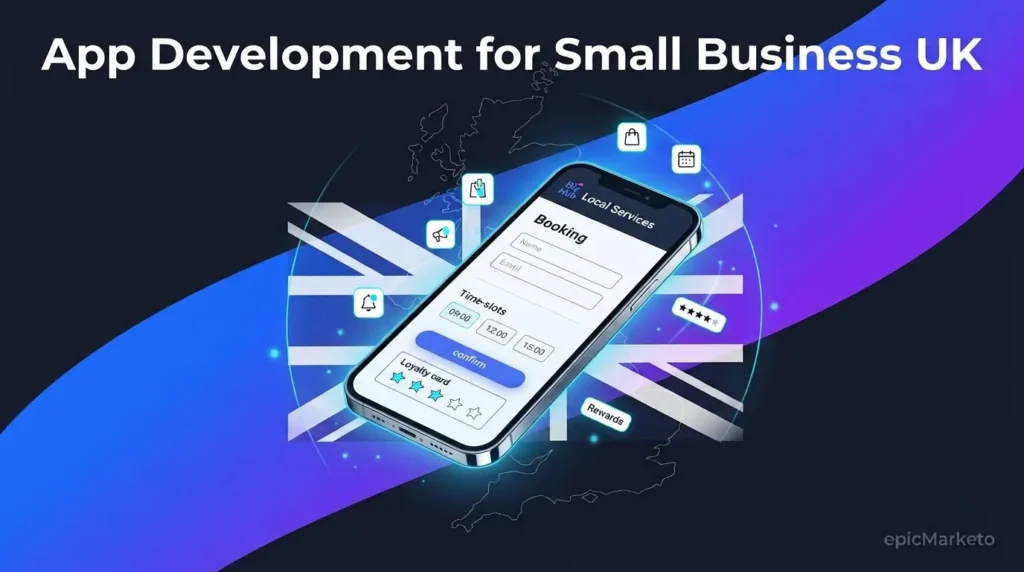
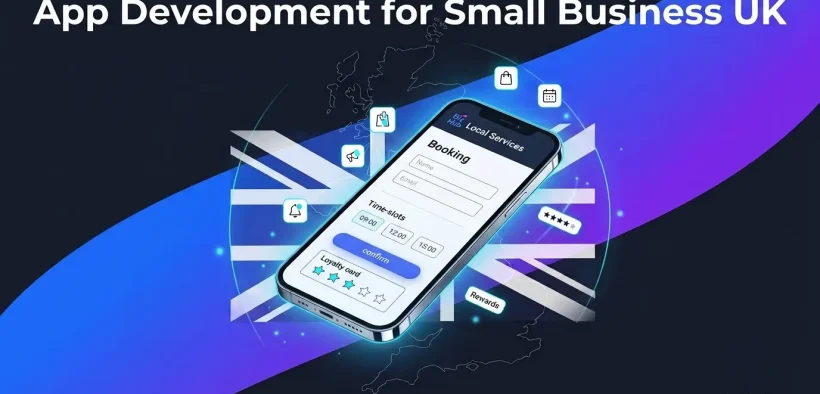
A shop owner in Reading once told me she’d spent four years building her bakery’s reputation on Instagram, then watched a competitor two streets over launch a basic ordering app and pull half her regulars away in a single summer. Nothing fancy just a menu, a “reserve your loaf” button, and push notifications for fresh sourdough on Saturdays. That was it. She wasn’t outspent. She was out-app’d.
That story sticks with me because it’s not really about technology. It’s about attention. Small business owners across the UK are fighting for a shrinking sliver of customer focus, and a phone home screen is one of the last places you can sit uninvited, day after day, without paying for an ad.
So when people ask whether app development for small business UK is worth it, my honest answer is: it depends entirely on what problem you’re trying to solve. Not every corner shop needs an app. But plenty of small businesses are bleeding revenue because they never asked the question properly in the first place.
Why This Actually Matters (And Why “We’ll Get to It Eventually” Is Costing You)
Here’s the uncomfortable bit. UK consumers now spend roughly four hours a day on their phones, and a huge chunk of that time sits inside a handful of apps they open on autopilot banking, food delivery, whatever loyalty scheme they signed up for at the till. If your business isn’t one of those tapped icons, you’re relying on people remembering you exist, finding your website through a search bar, or scrolling past your Instagram post before it disappears under six others.
That’s a weak position for a small business to be in. Websites are still essential don’t let anyone tell you otherwise but a website asks for attention. An app already has it, sitting quietly on the home screen, waiting.
I’ve watched independent gyms use apps just for class bookings and cut no-shows by a third, simply because reminders landed as push notifications instead of emails nobody opens. I’ve watched a small courier firm in Manchester replace three admin staff’s worth of phone-based scheduling with a driver-facing app that cost less than one month of their previous payroll. None of this is glamorous. It’s just businesses solving actual friction points, and an app happened to be the right tool.
The Mistakes Small Businesses Keep Making
I’ve sat in enough client meetings to see the same handful of mistakes repeat themselves, almost word for word.
Building the app before defining the job it needs to do. Someone gets excited about “having an app” as a concept, briefs a developer with vague ambitions, and ends up with a bloated product that tries to be a loyalty scheme, a booking system, and a social feed all at once. It does none of those things well, and customers delete it within a week. An app needs one clear job. Maybe two. Never five.
Choosing the cheapest freelancer without checking what happens after launch. This one backfires constantly. Someone hires a developer off a freelance marketplace for a flat fee, gets a working app, and then the developer vanishes. Six months later iOS pushes an update, the app breaks, and there’s nobody to fix it. Ongoing support isn’t optional it’s the part of app development for small business UK owners most often forget to budget for.
Skipping proper market research and copying a competitor instead. Plenty of small businesses look at what a bigger rival built and try to replicate it on a fraction of the budget. The result is usually a stripped-down, worse version of something that wasn’t designed for their customer base to begin with. Your customers aren’t the same as a national chain’s customers. Their expectations, patience, and phone habits are different too.
Treating the app as a one-off project instead of a living product. Apps need updates. Bugs need fixing. iOS and Android both change their rules a few times a year, and an app that isn’t maintained slowly becomes invisible in app store rankings or simply stops working on newer phones. Businesses that budget zero for post-launch maintenance are, in effect, planning to throw the whole investment away within eighteen months.
What It Actually Costs (Real Numbers, Not Guesswork)
This is the part people actually want to know, and it’s the part most agencies dance around.
A genuinely simple app think a menu, a booking form, maybe a loyalty stamp card typically runs somewhere between £3,000 and £8,000 in the UK market when built by a small studio or freelance team, less if you’re working with an experienced offshore team that keeps overheads lower without cutting corners on quality.
A mid-range app with proper user accounts, push notifications, payment integration, and a connected admin dashboard usually sits between £8,000 and £20,000. This is the bracket most independent retailers, salons, gyms, and hospitality businesses land in.
Anything with custom features real-time delivery tracking, inventory syncing across multiple locations, complex booking logic pushes past £20,000, sometimes well past it, depending on scope.
And then there’s the bit nobody likes to mention upfront: ongoing costs. Budget roughly 15–20% of the original build cost per year for maintenance, updates, and hosting. An app isn’t a website you build once and forget. It’s closer to a member of staff it needs looking after, or it stops performing.
A quick honest comparison, since numbers in isolation don’t mean much:
| Type of app | Typical UK cost | Best for |
|---|---|---|
| Simple booking/menu app | £3,000–£8,000 | Cafés, salons, small clinics |
| Mid-range app with accounts/payments | £8,000–£20,000 | Retail, gyms, hospitality chains |
| Custom-built with complex logic | £20,000+ | Delivery, multi-location, SaaS-style |
What to Actually Look For Before You Commit
Before signing anything, run through this. It’ll save you from at least two of the mistakes above.
- Ask the developer to name the single job the app is meant to do — if they can’t answer in one sentence, the brief isn’t ready yet.
- Ask what happens after launch. Get maintenance terms in writing, not verbally promised.
- Ask for two or three examples of apps they’ve built that are still live and actively updated, not just launched and abandoned.
- Ask how they handle App Store and Google Play submission — rejections happen constantly, and it shouldn’t be a surprise to either of you.
- Ask for a realistic timeline. Anything under four weeks for a genuinely functional app should raise an eyebrow.
- Ask who owns the code and the design files once the project ends. It should be you, in full, not held hostage by the developer.
The Bit That Actually Matters
That bakery owner in Reading eventually built her own app, about eight months after losing customers to her competitor. It wasn’t complicated. It didn’t need to be. She just needed to be the icon people tapped without thinking, instead of the shop they meant to visit and forgot.
Small business owners don’t need the flashiest app on the market. They need the right one, built for the actual problem sitting in front of them, by someone who’ll still answer the phone six months after launch.
If you’re weighing up whether app development makes sense for your business right now, it’s worth talking it through with people who build these things for a living rather than guessing alone which is exactly the kind of conversation the team at EpicMarketo is happy to have, no pressure attached.